Woad in the Lauragais: the blue of the Pays de Cocagne, then and now
Woad, called pastel here, is a plant whose leaves yield a blue dye. From the Middle Ages to the 16th century its trade enriched the triangle between Albi, Carcassonne and Toulouse, known then as the Pays de Cocagne, and the Lauragais had hundreds of woad mills. This page sticks to what the French Ministry of Culture's intangible heritage inventory documents, and says where you can see woad today and how far it is from the loft.
A plant whose blue only appears at the end
Dyer's woad, Isatis tinctoria, belongs to the brassica family. Its leaves hold no indigo as such, only colourless precursors called indoxyls. The blue appears after maceration, fermentation and oxidation, and that sequence is the craft. The inventory sheet notes that woad regrows quickly and gives on average four harvests a year, from May to October, depending on the weather.
The word pastel is Occitan, a 14th-century diminutive of pasta, paste: the plant was named after the way its pigment was prepared, by crushing the leaves into a paste pressed into balls. Those balls are the coques or cocagnes. They dried in lofts for seven to eight weeks before being crushed, watered and turned to start a second fermentation.
The Pays de Cocagne, Middle Ages to 16th century
The inventory sums up the golden age in one line: from the Middle Ages to the 16th century woad made the fortune of the Albi, Carcassonne, Toulouse triangle, then called the Pays de Cocagne. Growing it in the Lauragais took many hands, almost garden work, and the number of woad mills was considerable: several hundred, including six at Corronsac, ten at Caignac, five at Nailloux and three at Ayguevives. Most of these wooden mills have gone; place names remain, such as the hamlet of Moulin Pastelier at Saint-Félix-Lauragais, 11 minutes from the loft.
The merchants who grew rich on woad built. In Toulouse the Hôtel de Bernuy has been a listed historic monument since 1889 and the Hôtel d'Assézat since 1914; in Albi the Hôtel Reynès since 1862. The sheet also recalls that Colbert's 1669 dyeing instructions graded blues into thirteen shades.
Decline, then revival
The decline came in two steps. In the 17th century dyers began adding indigo from the indigo plant, imported from India and the Americas, to strengthen woad's colouring power. Then, in 1897, Adolf von Baeyer launched synthetic indigo and woad gradually disappeared from fields and dye works.
For nearly forty years its cultivation has been reviving in Occitanie, with support from the Toulouse agro-resources technology transfer centre: textiles, cosmetics, paints, inks. The market remains small, because pigment quality and quantity vary a great deal from year to year. Bleu de Lectoure, founded in 1994, was the reference company of that chain; the Ariège cooperative that extracted the pigment stopped in 2017. The Pays Lauragais territorial body, which groups Castelnaudary, Revel, Villefranche-de-Lauragais, Bram, Nailloux and Caraman, has registered the brand Pays de pastel.
Where to see woad today
One thing to know before setting off: the Muséum du Pastel run by Terre de Pastel is in Labège, on the edge of Toulouse, not at Magrin castle. They are two different places, 50 and 36 minutes from the loft.
A dye workshop in Roumens
10 min from the loft
Among the workshops where the craft is passed on through courses, the inventory names the Atelier des Bleus Pastel d'Occitanie of master dyer Denise Siméon Lambert in Roumens, the village next to the loft. We found no opening hours on an official source: ask the Revel tourist office before calling in.
The woad merchants' mansions in Toulouse
66 min from the loft
The Hôtel de Bernuy and the Hôtel d'Assézat, built by woad merchants in the 16th century, both listed historic monuments.
From the loft
The loft is in the hamlet of Dreuilhe, in Revel, in the old woad country: Roumens is 10 minutes away, Saint-Félix-Lauragais and its Moulin Pastelier 11 minutes, Labège 50 minutes by road. In Revel itself, a shop selling woad-dyed textiles is listed on the crafts page.
Frequently asked questions
What is pastel, or woad?
A plant, Isatis tinctoria, whose leaves give a blue pigment after maceration, fermentation and oxidation. The French name pastel is Occitan, from pasta, paste, because the leaves were crushed into a paste pressed into balls called cocagnes.
Why is it called the Pays de Cocagne?
Cocagnes are the balls of woad paste that were dried before sale. From the Middle Ages to the 16th century their trade enriched the triangle between Albi, Carcassonne and Toulouse, hence the name.
Where can I see woad near Revel?
At the Muséum du Pastel in Labège, 50 minutes away, open from 19 May to 31 December 2026 with a dyeing demonstration; at La Ferme au Village in Lautrec, 47 minutes, from April to October; and at a dye workshop in Roumens, 10 minutes away, by asking the tourist office.
Is the woad museum at Magrin castle?
Magrin castle, in the Tarn, has a listed woad drying loft and a museum, but it is private and we could not confirm its 2026 opening hours. The Muséum du Pastel run by Terre de Pastel is a different place, in Labège.
Why did woad disappear?
Indigo from India and the Americas was added to it from the 17th century, then synthetic indigo, launched in 1897, drove it out of the fields and dye works. It has been grown again in Occitanie for about forty years.
Sleep next door
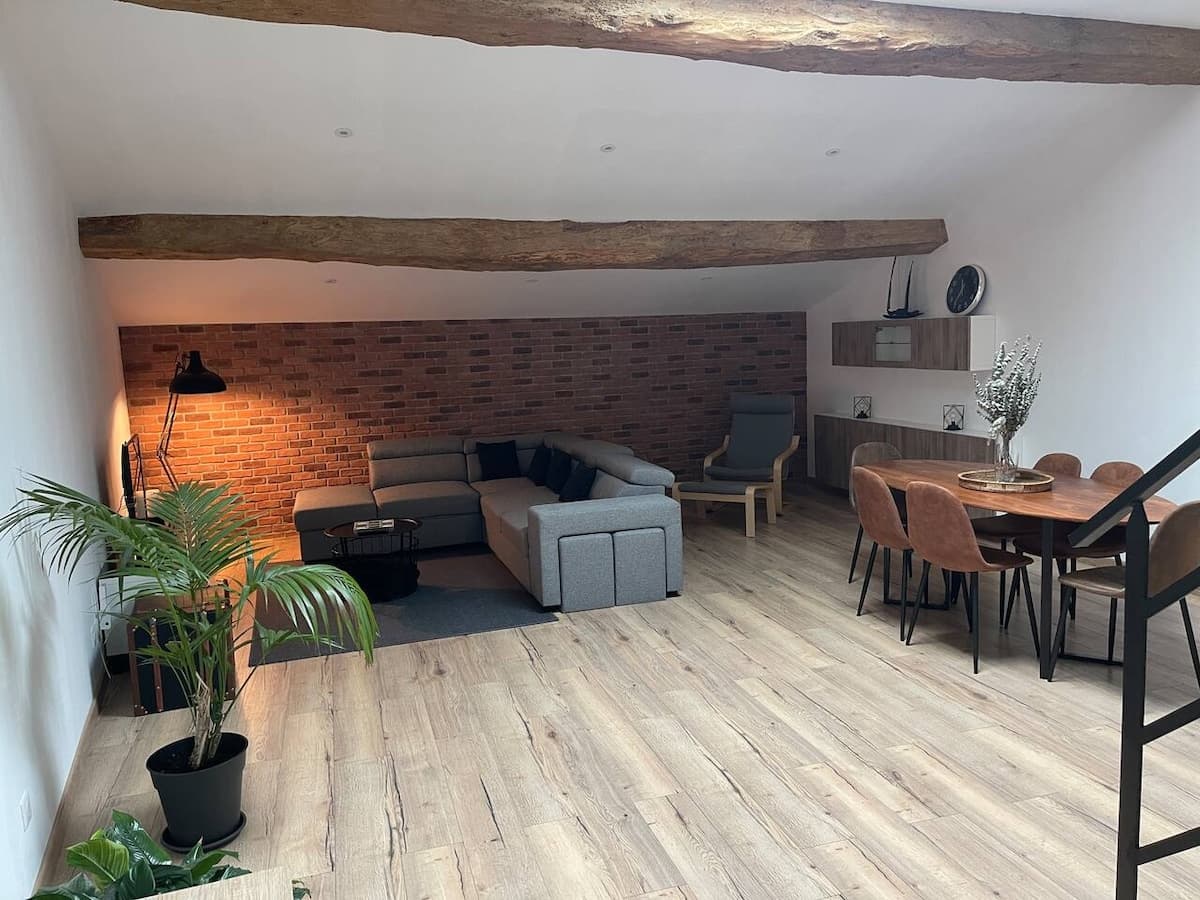
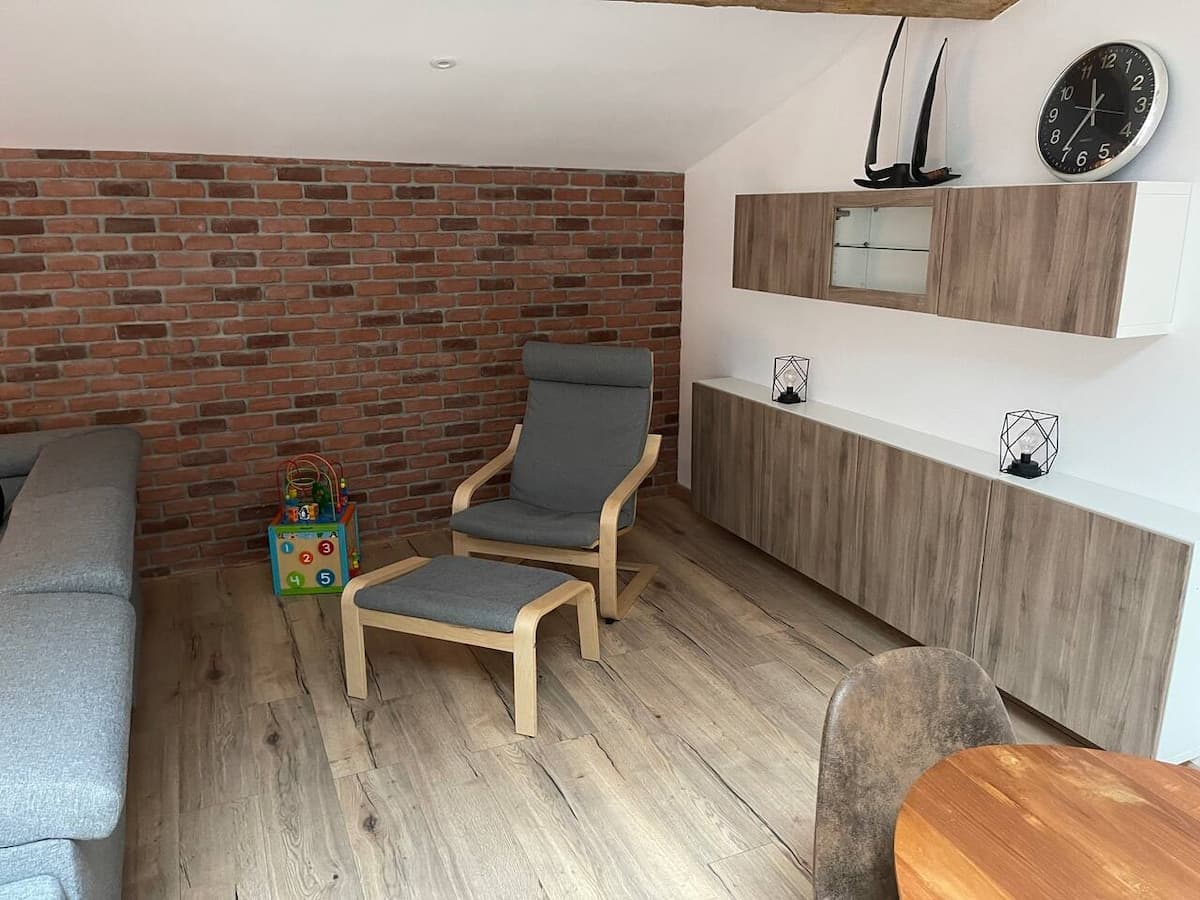
The Industrial Lodge, an 85 m² loft for five in the hamlet of Dreuilhe. Booked direct, 10% less than on the platforms.
€63a nightwhen booking here€70 on the platforms
See also
Your host: Florian